
Answer Engine Optimization (AEO) 101: What It Is and Why It’s Changing SEO

If you’ve searched for something on Google recently, you’ve probably noticed that the results page looks a lot different than it did a few years ago. Before you even get to the list of links, there’s often an AI-generated summary (sometimes called an “overview”) sitting at the top, pulling information from various sources and presenting it as a direct answer. In many cases, users read that answer and never scroll down.
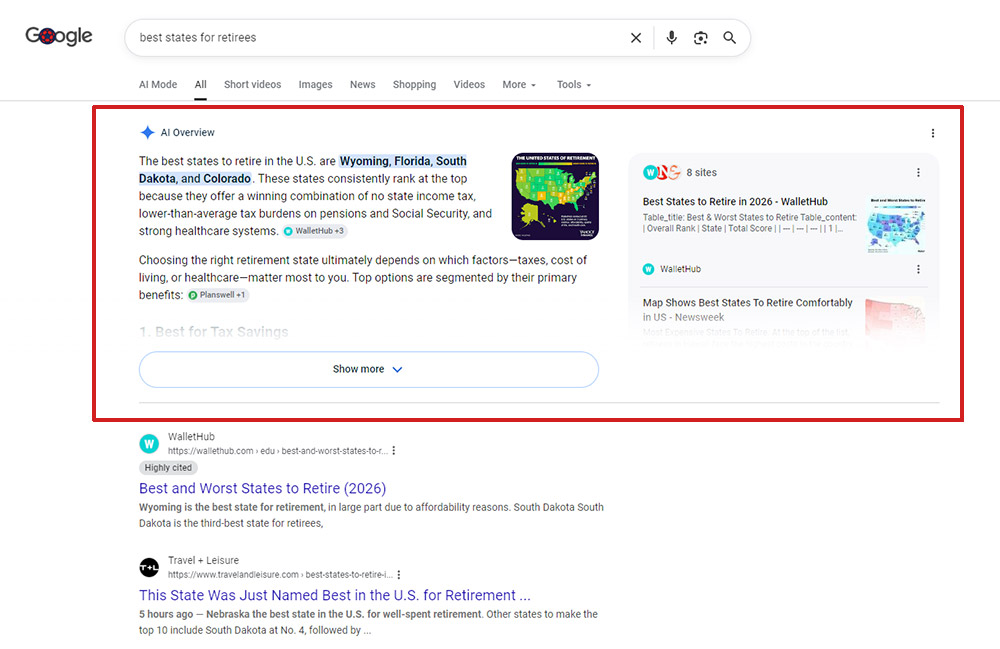
This is the direction search is heading, and it’s accelerating faster than many businesses realize. Answer engine optimization, or AEO, is how you give your content the best chance to be part of what those systems pull from, not invisible to them.
What Is an Answer Engine
Before getting into AEO specifically, it helps to understand what an answer engine actually is.
📖 Definition
An answer engine is any tool that responds to a query with a direct, generated answer rather than a list of links to explore. Google’s AI Overviews, ChatGPT, Perplexity, Microsoft’s Bing Copilot, and Apple’s Siri all function this way. Instead of pointing you somewhere, they synthesize information and give you a response on the spot.
Traditional search engines were designed to connect you with sources. Answer engines are designed to be the source. That changes how content needs to be written and structured.
What Answer Engine Optimization Actually Means
AEO is the practice of creating content that AI-powered tools and voice assistants are more likely to use when generating their answers. If someone asks ChatGPT or Perplexity a question that your business could reasonably answer, AEO is what gives you a shot at being the source they draw from.
It’s worth being clear that AEO isn’t a replacement for SEO. Strong technical SEO, good site structure, quality backlinks, and authoritative content all still matter. They’re the foundation everything else is built on. But traditional SEO is optimized for ranking in a list of links. AEO takes a slightly different approach, prioritizing how clearly and directly your content answers specific questions.
The goal is to write content that an AI can actually use, not just index.
Why This Matters More Than It Did a Year Ago
The numbers here are hard to ignore. Google’s AI Overviews now appear in a significant portion of U.S. searches, and that percentage has been climbing steadily since the feature launched broadly in 2024. ChatGPT has nearly a billion weekly active users (and growing quickly) and has become a go-to research tool for a growing share of people who used to start their searches on Google. Perplexity has built a loyal following among researchers and professionals who want cited, synthesized answers rather than a page of links to sort through.
And equally as important, user trust in these AI-generated answers has grown incredibly quickly. A 2026 study from Clear Spark Digital found that 68% of internet users already trust AI-generated answers as much or more than organic Google search results.
📈 Trend Watch
Zero-click searches, where someone gets their answer directly from a search results page without ever visiting a website, have been a concern for publishers since featured snippets became widespread. AI-generated answers take that further. When an AI tool synthesizes an answer from multiple sources, the traffic that would have gone to those sources often doesn’t materialize at all.
This doesn’t mean organic search traffic is disappearing overnight. But the businesses that adapt now will be in a much better position than those waiting to see how things shake out.
How Answer Engines Decide What to Pull From
Answer engines don’t pick sources randomly. There are a few factors that consistently influence whether your content gets used.
Authority and Trustworthiness
Google’s E-E-A-T framework (Experience, Expertise, Authoritativeness, Trustworthiness) was originally developed for traditional search quality, but it applies just as directly to AI-driven results. Content from sources with demonstrated expertise and a strong reputation is more likely to be cited. Anonymous, thin, or poorly sourced content generally isn’t.
How Directly the Content Answers the Question
AI tools are trying to give users a clear answer. If your content buries the answer in four paragraphs of setup, or never quite states it plainly, there are better options available. Content that gets to the point and answers the question in a readable, organized way is more likely to be used.
Structured Data
Schema markup gives search engines and AI tools additional context about what your content contains. FAQ schema, HowTo schema, and Article schema all help AI systems understand and categorize your content more accurately.
Mentions and Citations Across the Web
If other reputable sites link to your content, cite it, or reference your brand, that builds the kind of authority that influences AI systems. It’s the same logic as traditional link building, but it also includes brand mentions even without links.
💡Pro Tip
Google’s “People Also Ask” boxes are one of the most useful free tools for AEO research. They show you the exact questions real users are asking around any topic. If your content answers those questions clearly and concisely, you’re already aligned with what answer engines are looking for.
SEO vs. AEO vs. GEO
The terminology around this space is still settling, and different people use different terms. Here’s a quick breakdown of the three you’ll most often encounter.
📖 Definition
SEO (Search Engine Optimization) is the established practice of optimizing content to rank well in traditional search results.
AEO (Answer Engine Optimization) focuses specifically on getting your content used as a source by AI-powered tools and voice assistants that generate direct answers.
GEO (Generative Engine Optimization) is a newer term that some researchers and marketers use to describe essentially the same goal as AEO — optimizing for generative AI systems. The two terms are often used interchangeably.
For most businesses and marketers, AEO is the most practical framing. It captures what you’re actually trying to do: show up in the answers these tools generate.
What Good AEO Looks Like in Practice
This is where the strategy moves from concept to execution. A few things consistently make content more AEO-friendly.
1. Write for Questions, Not Just Topics
Instead of a page titled “Our SEO Services,” consider what specific questions your potential clients are typing or speaking. “How much does SEO cost?” “How long does it take to see results from SEO?” “What should I look for in an SEO agency?” Content built around real questions performs better with answer engines.
2. Put the answer up front
If someone asks a question and your content takes three paragraphs to get to the actual answer, an AI tool will likely find a source that doesn’t make users wait. State the direct answer early, then provide the context and supporting detail.
3. Use Clear Headers That Mirror Real Questions
Headers formatted as questions (or close to it) help AI systems understand what each section of your content is about. “What does an SEO audit include?” is more useful to an answer engine than “Our Audit Process.”
4. Add FAQ Sections to High-Value Pages
A well-structured FAQ block at the bottom of a service or resource page gives AI tools easy-to-parse question-and-answer content. Pair that with FAQ schema, and you’ve made the content even easier for these systems to interpret correctly.
5. Keep Content Accurate and Current
AI tools tend to favor reliable, up-to-date sources. Content that hasn’t been reviewed in two years, contains outdated information, or makes claims that can’t be verified is going to lose ground to content that’s clearly maintained.
✅ Action Step
Pick one high-traffic page on your site and read through it with this question in mind: if someone asked an AI tool the question this page is supposed to answer, would your content provide a clear enough response to be worth citing? If the answer is anything less than a confident yes, that page is a good starting point for AEO improvements.
Common AEO Mistakes
A few missteps come up regularly, especially among teams that are just starting to pay attention to this area.
1. Writing for keywords instead of questions
Traditional keyword optimization focused on working target phrases into your content naturally. AEO requires a shift toward the intent behind those phrases, specifically, what question is the user actually trying to answer? Content that reads like it was written for a keyword list, rather than for a curious person, tends to underperform with AI systems.
2. Ignoring structured data entirely
Schema markup isn’t new, but a lot of sites still don’t use it. For AEO, it’s one of the more straightforward improvements available. FAQ and HowTo schema in particular give AI systems explicit signals about your content’s structure.
3. Publishing Content That Technically Covers a Topic But Doesn’t Actually Answer Anything
Long articles that stay vague, hedge everything, and never commit to a clear answer are common in content marketing. They may have ranked well in traditional search, but answer engines have less patience for them.
Thin content, pages that talk around a topic without really addressing it, is one of the bigger liabilities in an AEO context. If your content doesn’t give a reader a genuinely useful answer, an AI tool isn’t going to use it as a source either. Audit your existing content with a critical eye toward whether each page actually delivers on what its title promises.
Do You Need to Hire Someone for AEO
For smaller businesses or teams with an existing content operation, a lot of AEO improvements are things you can implement without outside help. Restructuring content around questions, adding FAQ sections, updating old pages, and installing schema markup are all achievable in-house if you have someone with a basic technical background and reasonable content instincts.
That said, if your site has a large content library that hasn’t been audited in a while, if you’re in a competitive industry where AI search visibility actually drives leads, or if SEO hasn’t been a priority and there are deeper foundational issues, working with an agency or consultant who understands both traditional SEO and AEO is worth considering. The two are connected enough that you don’t want to optimize for AI search on a foundation that has significant technical SEO problems underneath it.
⚡ Quick Win
Add an FAQ section to your most-visited service or resource page this week. Write the questions the way a real person would ask them, keep the answers concise and direct, and add FAQ schema markup. It takes a few hours, and it’s one of the most straightforward AEO improvements available.
Where This Is All Going
AEO is still a relatively new discipline. The tools, best practices, and even the terminology are continuing to develop. But the direction is consistent: more searches are going to be answered directly by AI, fewer clicks are going to flow to traditional search results, and content that’s built to be useful to both humans and AI systems is going to have a meaningful advantage.
The businesses that treat this as “a thing to watch” and never actually change their content approach will find themselves with shrinking visibility as AI search matures. The ones that start adapting now, even with small, practical steps, will be in a better position moving forward.